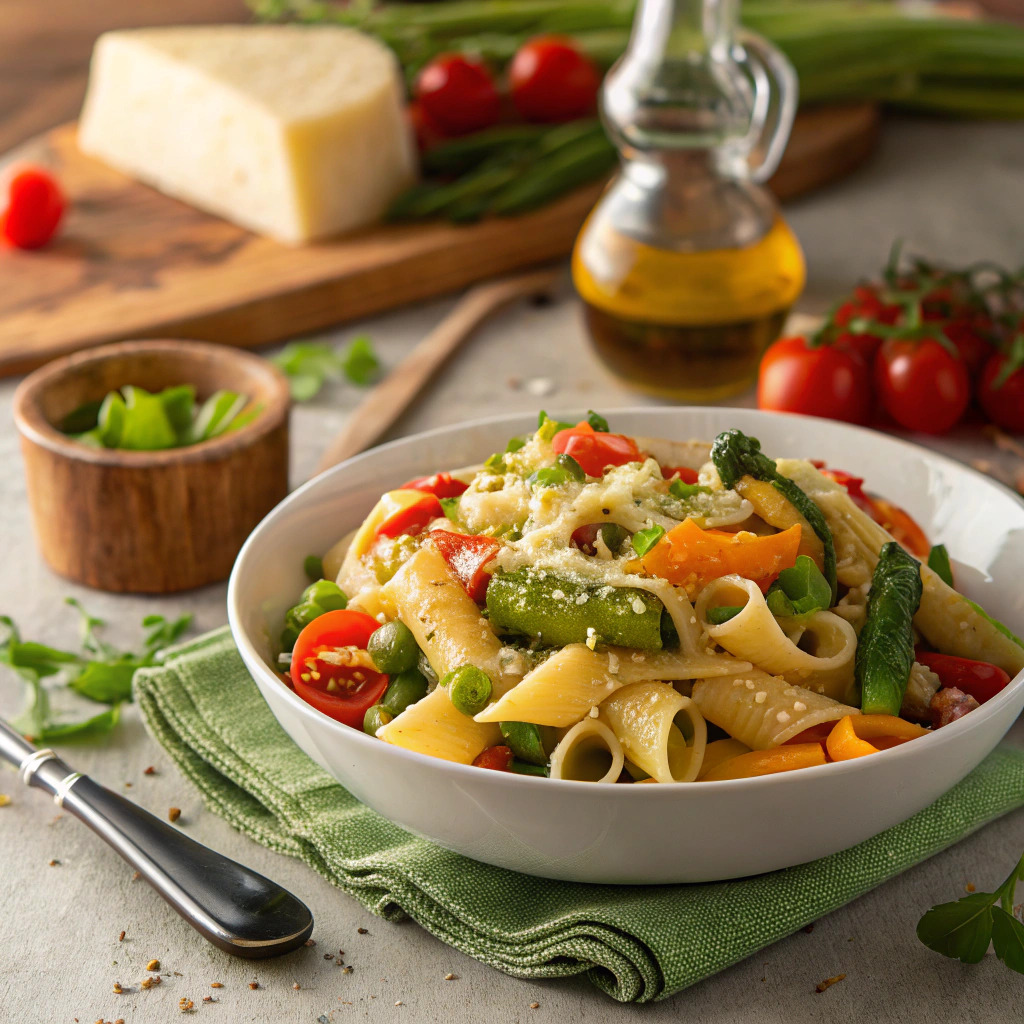
This veggie pasta recipe is a vibrant and delicious way to load up on vegetables while enjoying a comforting dish. Perfect for any day of the week, it\’s not only healthy but also incredibly satisfying.

Why This Recipe Deserves a Spot in Your Cookbook
The beauty of veggie pasta lies in its versatility and the ease with which you can customize it. Fresh seasonal vegetables bring a burst of flavor and color, while whole wheat or gluten-free pasta options provide a wholesome base. This recipe showcases a medley of vegetables like zucchini, bell peppers, and spinach, all sautéed to perfection. The addition of garlic and herbs elevates the dish, creating a delightful aroma that will fill your kitchen. Whether you're a seasoned cook or a beginner, this recipe is straightforward and quick, making it an ideal choice for busy weeknights or leisurely weekends. With the option to add protein like chickpeas or grilled chicken, you can easily transform this dish to suit your dietary preferences and make it even more filling. Enjoy this veggie pasta as a stand-alone meal or pair it with a side salad for a complete dining experience.
Kitchen Prep
To prepare this veggie pasta, you'll need a few essential items.
- A large pot for boiling pasta
- A sauté pan for cooking the vegetables
- A colander for draining the pasta
- A cutting board and knife for chopping the vegetables
- A spatula for stirring
- Measuring cups and spoons for accuracy. Having these items ready will streamline the cooking process and ensure that you can focus on creating a delicious meal.
Lessons Learned
When making veggie pasta, it's crucial to handle ingredients properly to ensure both safety and flavor. Start by washing all vegetables thoroughly to remove any dirt or pesticides. Make sure to cook the pasta al dente to prevent it from becoming mushy. To enhance the flavors, sauté the garlic before adding the vegetables, allowing it to become fragrant. Always check that any proteins added have reached the appropriate internal temperatures; chicken should be at least 165°F, while ground beef should reach 160°F. If using canned beans, rinse them under cold water to reduce sodium content. For an extra touch of freshness, consider adding a squeeze of lemon juice or a sprinkle of Parmesan cheese before serving. Keep leftovers in an airtight container in the refrigerator to maintain freshness.
Recipe Card

Ingredients
- 8 ounces whole wheat pasta
- 1 zucchini, sliced
- 1 bell pepper, diced
- 2 cups spinach, fresh
- 2 garlic cloves, minced
- 2 tablespoons olive oil
- 1 teaspoon dried oregano
- Salt and pepper to taste
- Grated Parmesan cheese for serving, optional
Instructions
- Bring a large pot of salted water to a boil and cook the pasta according to package instructions until al dente.
- While the pasta cooks, heat olive oil in a sauté pan over medium heat.
- Add minced garlic and sauté for about one minute until fragrant.
- Stir in the zucchini and bell pepper, cooking for 5-7 minutes until tender.
- Add the spinach and dried oregano, cooking until the spinach wilts.
- Drain the pasta and add it to the sauté pan, tossing everything together.
- Season with salt and pepper to taste, and serve with grated Parmesan cheese if desired.
Storage Instructions
Store leftovers in an airtight container in the refrigerator for up to three days. Reheat gently on the stove or in the microwave.
Variations to Keep It Interesting
You can easily customize this veggie pasta recipe by incorporating different vegetables based on your preferences or what you have on hand. Try adding cherry tomatoes, broccoli, or asparagus for added texture and flavor. For a creamy version, consider stirring in a dollop of ricotta cheese or a splash of cream at the end of cooking. If you're looking for a gluten-free option, substitute regular pasta with quinoa or zucchini noodles. For an added boost of protein, toss in some cooked lentils or tofu. Experimenting with different herbs such as basil, oregano, or thyme can also elevate the dish, providing a unique twist each time you prepare it.
What Else Goes on the Plate
To serve the veggie pasta, divide it into bowls and garnish with fresh herbs or a light drizzle of olive oil for an extra touch of flavor. Pair it with a side salad dressed with vinaigrette to create a balanced meal. For those who enjoy a bit of heat, offer red pepper flakes on the side. This dish can be enjoyed warm or at room temperature, making it perfect for meal prep or potlucks. Leftover veggie pasta can be warmed up the next day for a quick lunch or dinner.
Troubleshooting Like a Pro
| Problem | Solution |
|---|---|
| The pasta is overcooked and mushy. | Always check the pasta a minute or two before the package instructions indicate, and taste it to ensure it is al dente. |
| The vegetables are soggy. | Cook them separately from the pasta and avoid overcrowding the pan to allow them to sauté properly. |
| The dish lacks flavor. | Ensure that you season the vegetables with salt and pepper while cooking, and consider adding a splash of vegetable broth or white wine for depth. |
Your Questions Deserve Answers
Can I use gluten-free pasta?
Yes, gluten-free pasta works well in this recipe.
How can I make this dish vegan?
Simply omit the Parmesan cheese, and consider adding more plant-based proteins like chickpeas.
What other vegetables can I add?
You can experiment with broccoli, asparagus, or even carrots to suit your taste.